I may chat about my books, what I'm writing or reading, or just general thoughts. You may read posts about my cats or just my crazy life in general. Comments are welcome, if anyone wants to interact with me. Maybe we can share war stories, whether it's writing related or just about life in general.

Showing posts with label minerals. Show all posts

Monday, April 30, 2018

Z is for Zirconia


Most of you know this as synthetic diamond and probably a few of you have some of these gems at home.  They are sparkly and beautiful and can be almost any color.

It may surprise you to know that the main use of zirconia is in the production of ceramics as in dentistry.  It’s used in reconstruction, such as crowns or bridges.  Stabilized zirconia is used in oxygen sensors.  It also has potential applications as an insulator in transistors.


A brilliant cut cubic zirconia - pic courtesy of Wikipedia

When used in jewelry it has a high index of refraction and the same crystal structure as diamond.  It’s very difficult to determine the difference of a diamond and zirconia by visual testing alone.  A thermal conductivity test needs to be performed.  Diamond is a good thermal conductor where zirconia isn’t.

Saturday, April 28, 2018

Y is for Yuksporite


Yuksporite - pic courtesy of Wikipedia

This is a rather pretty color mineral found in Russia.  This is a silicate mineral.  It contains rare elements of strontium, titanium and niobium, as well as the commoner metallic elements potassium, calcium, sodium and manganese.  It was found in Russia in 1922 and was named for the locality, near Mount Yukspor.


Yuksporite - pic courtesy of Wikipedia

The mineral is brownish-pink, rose pink or yellowish in color.  It has a silky vitreous luster.  Its makeup is similar to quartz but closer to tourmaline.  So far, the only occurrences of this mineral have been in Russia.

Friday, April 27, 2018

X is for Xyloid jasper


Xyloid jasper - courtesy of Wikipedia

This one is very interesting.  This is petrified wood that has fossilized.  All the original chemicals have been replaced with minerals, making a stone-like replica of the original wood.


Xyloid jasper - courtesy of Wikipedia

Xyloid jasper can be found all over the world, if conditions are right.

Thursday, April 26, 2018

W is for Wulfenite


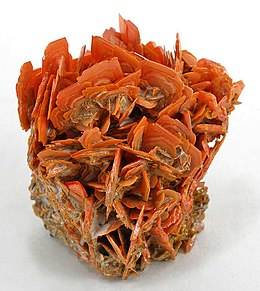
Wulfenite - pic courtesy of Wikipedia

This is found in tabular crystals with bright orange-red or yellow-orange color.  It’s found in many localities associated with lead ores.  In fact, the yellow form is sometimes called “yellow lead ore.”  Its also a secondary ore of molybdenum and is sought by collectors.

Wulfenite - pic courtesy of Wikipedia

Wulfenite was first discovered in 1845 in Austria and is named for Austrian mineralogist, Franz Xavier von Wulfen.

Wulfenite - pic courtesy of Wikipedia

Different colors of wulfenite seem to be found in different mines.  In Arizona the crystals are deep red in color.  In Mexico they’re thick tabular orange crystals and in Slovenia they’re yellow.  In 1997, the crystal was depicted on a stamp by the Post of Slovenia.


It’s soft and brittle and probably better as a crystal specimen instead of a candidate for jewelry.

Monday, April 23, 2018

T is for Turquoise


Turquoise - pic courtesy of Wikipedia

Turquoise is an opaque green to blue mineral.  This mineral is a hydrated phosphate of copper and aluminum.  It’s been known by many names but ended up with the name turquoise because its arrival in Europe in the 17th century was through Turkey from mines in Persia.

Turquoise is typically found in arid regions, suggesting climate plays a big part in its formation.


Turquoise - pics courtesy of Wikipedia

Turquoise was among the first gems ever mined.  The mining is done by hand in small scale operations.  It’s often discovered as a byproduct of large scale copper mining in the United States.  Copper mines are also found in Iran and on the Sanai Peninsula.  The southwest United States is a significant source of turquoise.  Sometimes in an attempt to meet demand, turquoise is treated or enhanced.  Sometimes these treatments also include  waxing or dyeing.

Even though turquoise was used in ancient times, it didn’t become significant until the 14th century following a decline in the Roman Catholic Churches influence which allowed the stone to be used in secular jewelry.

Turquoise - pic courtesy of Wikipedia

Turquoise was thought to change color with the wearers health and protect him or her from untoward forces.

Turquoise was widely used by the Aztecs, Pueblo, Navajo and Apache tribes.  They cherished turquoise as amulets.


Turquoise - pic courtesy of Wikipedia

Turquoise is fragile and sensitive to solvents and even perfume.  Care must be taken so as to avoid contact with body lotion, sunscreen and cosmetics.  It’s also best to keep turquoise away from direct sunlight, as it can fade with prolonged sun exposure.

Thursday, April 19, 2018

Q is for Quartz


Quartz from Tibet - pic courtesy of Wikipedia

Quartz is the second most abundant mineral in Earth’s continental crust, behind feldspar.  There are many different varieties of quartz, several of which are semi-precious gemstones.  Since antiquity, varieties of quartz have been the most commonly used minerals for making jewelry and carvings.

Pure quartz is colorless and transparent.  The other colors of quartz are mixed with other minerals.  This colored quartz are semi-precious stones for making jewelry and other decorative pieces.

Amethyst - pic courtesy of Wikipedia

There are many varieties of these, but I’ll just mention a few.  Purple quartz is amethyst.  The largest deposit is found in Brazil.  Amethyst is formed when there is iron in the area.  

Citrine - pic courtesy of Wikipedia

Citrine is a variety of quartz that ranges from pale yellow to brown due to the ferric impurities.  Natural citrines are rare.  Most commercial citrines are heat-treated amethyst, or smoky quartz's.  Brazil is the leading producer of citrine.  Citrine has been referred to as “money stone” due to the superstition that it would bring prosperity.

Rose Quartz - pic courtesy of Wikipedia

Rose quartz is pale pink to rose red in color.  This is due to trace amounts of titanium, iron, or manganese.

A quartz crystal jug from the 16th century.  This piece is in the National Museum in Warsaw.  
Pic courtesy of Wikipedia

Quartz is very common in sedimentary rocks, such as sandstone and shale.  Quartz is a defining essential of granite.


Almost all of the quartz crystals used today in the electronics industry are synthetic.

Monday, April 16, 2018

N is for Nickel


Nickel is considered corrosion-resistant, but it will slowly oxidize by air at room temperatures.  It was used for plating iron and brass, coating chemistry equipment and manufacturing certain alloys that retain a high silvery polish.  About 9% of nickel production today is still used for corrosion- resistant plating.  It’s also been used to make coins, but in recent years is being replaced with cheaper metals.

Nickel most often occurs in combination with iron and Sulfur.  Nickel is commonly found in iron meteorites.  Australia and New Caledonia have the largest reserves of nickel.

Nickel coins - pic courtesy of Wilkipedia

Aside from some very early coins, nickel wasn’t a component of coins until the mid-19th century.

Nickel pic courtesy of Wikipedia

About two million tons of nickel is produced annually worldwide.  The Philippines, Indonesia, Russia, Canada and Australia are the world’s largest producers of nickel.  

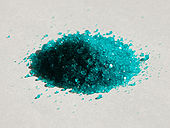
Hydrated nickel sulfate crystals - pic courtesy of Wikipedia

Nickel is used in stainless steel, rechargeable batteries, electric guitar strings, coins, and plating on plumbing fixtures.


Nickel is the top confirmed contact allergen worldwide, partly due to its use in jewelry for pierced ears.  Many earrings are now made without nickel, or with a low-release nickel.  Contact dermatitis is marked by itchy, red skin and affects nearly 72.29 million people.

Saturday, April 14, 2018

M is for Malachite


Malachite is a beautiful stone with layers of light and dark green.  This makes it easy to recognize.  The lines can be straight, curvy or wiggly. 

Malachite, isn't this beautiful?

Malachite often results from the weathering of copper ores.  It is typically associated with copper deposits around limestone.  Sometimes it’s found as stalactites in caves.  Wouldn’t that be an amazing sight?

This malachite is from Arizona 

Malachite is found worldwide.  Arizona is the most notable place in the US.


Malachite specimens

Malachite can be used for ornaments, furniture and jewelry.  There are large vases in museums.


Malachite - this vase is in Hermitage Museum in St. Petersburg

When I lived in Alaska in the 1970’s, we sold malachite and other gemstones, such as turquoise, in the leather store I worked in.  We had lots of items that used stone embellishments.  I still have a purse I made in the leather shop there and it has a drilled malachite closure.

Photos courtesy of Wikipedia and a gemstone site in the UK

Thursday, April 12, 2018

K is for Kunzite


Kunzite is a pink to lilac gemstone.  The coloring is from trace amounts of manganese.  Some kunzite has been heated or eradiated to enhance the color for jewelry.

Kunzite pic courtesy of Wikipedia

It was discovered in 1902 so is relatively new in the world of minerals.  It gets its name from George Frederick Kunz who was the chief jeweler at Tiffany and Co at the time.  He was a noted mineralogist. 


Kunzite from Afghanistan courtesy of Wikipedia

Kunzite is found in Brazil, the US, Canada, Mexico, Sweden, Western Australia, Afghanistan and Pakistan.  The Duchess of Glouchester wears kunzite in her tiara and has a necklace made with this mineral.

Wednesday, April 11, 2018

J is for Jasper


Kaleidoscope jasper

This is what I usually think of for jasper

Jasper is a form of quartz that is usually red, yellow, green or brown, or a mixture of these colors that when polished makes beautiful jewelry.  The name means “speckled stone.”  Like many minerals, Jasper forms from volcanic ash.  Patterns arise during the consolidation process.  Sometimes the original materials are fractured allowing other colorful minerals to fill in the gaps.


Polished jasper

Yellow jasper

This is a jasper bowl from Russia late 19th century- all pics courtesy of Wikipedia

Jasper was popular in the ancient world because it breaks with a smooth surface and is easily refined.  Weathering with time will create intensely colored pieces of jasper.  Today sometimes the jasper is named for the region where it originates, such as Biggs jasper from Oregon and Bruneau jasper from the Bruneau River in Idaho.  There’s also one called Llanddwyn Island jasper from Wales 

Tuesday, April 10, 2018

I is for Iridium


Iridium was discovered in 1803 and is part of the platinum group of metals.  It’s hard, brittle and silvery white.  It’s also the most corrosive resistant metal.  Iridium is one of the rarest metals in Earth’s crust.  Iridium metal is used when high corrosion existence at high temperatures is needed, such as high performance spark plugs.

Iridium is found in meteorites in much higher abundance than in Earth’s crust.  It’s believed this mineral was in the large meteorite that crashed into Earth thousands of years ago and caused the extinction of the dinosaurs.

A troy ounce of iridium - photo courtesy of Wikipedia

Because of iridium’s high melting point, it makes this metal very hard to machine or form.  Iridium is the most non corrosive mineral known.  It isn’t even corroded by acid, molten medals or silicates.  It can be attacked by some molten salts such as sodium cyanide or potassium cyanide.

The largest primary reserves of iridium are found on Africa, Russia and Canada.


Certain long-life aircraft parts are made from an iridium alloy.  Other alloys of iridium are used in deep water pipes.  It’s also used in x-ray telescopes.  The radioisotope iridium-192 is used as a source of gamma radiation for treating some types of cancer.

Monday, April 9, 2018

H is for Hematite


Hematite is the mineral form of iron oxide.  Hematite is harder than iron, but also more brittle.  It ranges in color from black to silver-gray and brown to reddish-brown and red.  Gray hematite is found in places with standing water such as mineral hot springs, or a lake or stream.  In places without water, it usually occurs as a product of volcanic activity.

Raw hematite courtesy of Wikipedia

Hematite’s most popular time in jewelry was during the Victorian era in Europe.


Carved bear courtesy of Wikipedia

Huge deposits of hematite are found in banded iron formations.  There’s a type of red hematite that’s used in traditional Swedish house paint.

Saturday, April 7, 2018

G is for Geodes


I was going to write about gold here, but this is more interesting and there are some facts here that I bet you’ll be surprised about.

Unopened geode - see how plain this is

This is a geode sliced open.  Sorry this pic is in black and white

Geodes are agates that got their name from “achates” because the first one was found near the river Achates in Sicily.  Agates come in a wide variety of colors and patterns.  One must be careful buying them because this stone is easy to dye and the bright, gaudy ones aren’t natural colors.

A geode slice

But how they form is the really cool thing about agates.  They occur as a cavity filling in lava.  If a bubble of gas forms in the lava when it hardens this bubble fills up with silicates.  This is called geode.  You can buy whole geodes, which look dull and like a lump of rock but once opened they glisten with quartz crystals, which can be in many beautiful colors.  It’s truly a feast for the eyes that something so stunning can be on the inside of something so plain and ordinary. 


Here are more sliced geodes

I’m sure many of you have seen these around in souvenir shops, or at gem fairs.  They are strikingly gorgeous and make good bookends, or a conversation piece to sit on a shelf.


And look at this one.  Isn't it pretty?

You can also buy flat “slices” of geodes, which show patterns to their best effect.  When the geode fills up sometimes it hardens in layers of different colors.  If there’s a gap more quartz crystals may grow.  These flat pieces make excellent jewelry.