I may chat about my books, what I'm writing or reading, or just general thoughts. You may read posts about my cats or just my crazy life in general. Comments are welcome, if anyone wants to interact with me. Maybe we can share war stories, whether it's writing related or just about life in general.

Showing posts with label meteorites. Show all posts

Wednesday, April 18, 2018

P is for Peridot


Peridot is gem-quality olivine, which is a silicate mineral.  It’s one of the few gemstones that occur only in one color, olive green.  The intensity and tint of the green depends on the percentage of iron that’s contained in the crystal structure.  Peridot can occur as pure green with no yellow or brown cast.

Peridot - pic courtesy of wikipedia

Olivine is often found in lava and meteorites.  A peridot formed in volcanic activity tends to contain higher concentrations of lithium, nickel and zinc.  Olivine is an abundant mineral, but gem-quality peridot is rare.  Olivine tends to exist in a heavily weathered state, thus making it unsuitable for decorative use.

A cut and polished Peridot gemstone - pic courtesy of Wikipedia

The largest cut peridot olivine is 310 carats and is in the Smithsonian Museum in Washington, DC.


This is the birthstone for people born in the month of August.

Monday, April 16, 2018

N is for Nickel


Nickel is considered corrosion-resistant, but it will slowly oxidize by air at room temperatures.  It was used for plating iron and brass, coating chemistry equipment and manufacturing certain alloys that retain a high silvery polish.  About 9% of nickel production today is still used for corrosion- resistant plating.  It’s also been used to make coins, but in recent years is being replaced with cheaper metals.

Nickel most often occurs in combination with iron and Sulfur.  Nickel is commonly found in iron meteorites.  Australia and New Caledonia have the largest reserves of nickel.

Nickel coins - pic courtesy of Wilkipedia

Aside from some very early coins, nickel wasn’t a component of coins until the mid-19th century.

Nickel pic courtesy of Wikipedia

About two million tons of nickel is produced annually worldwide.  The Philippines, Indonesia, Russia, Canada and Australia are the world’s largest producers of nickel.  

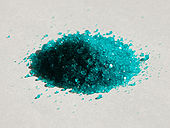
Hydrated nickel sulfate crystals - pic courtesy of Wikipedia

Nickel is used in stainless steel, rechargeable batteries, electric guitar strings, coins, and plating on plumbing fixtures.


Nickel is the top confirmed contact allergen worldwide, partly due to its use in jewelry for pierced ears.  Many earrings are now made without nickel, or with a low-release nickel.  Contact dermatitis is marked by itchy, red skin and affects nearly 72.29 million people.

Tuesday, April 10, 2018

I is for Iridium


Iridium was discovered in 1803 and is part of the platinum group of metals.  It’s hard, brittle and silvery white.  It’s also the most corrosive resistant metal.  Iridium is one of the rarest metals in Earth’s crust.  Iridium metal is used when high corrosion existence at high temperatures is needed, such as high performance spark plugs.

Iridium is found in meteorites in much higher abundance than in Earth’s crust.  It’s believed this mineral was in the large meteorite that crashed into Earth thousands of years ago and caused the extinction of the dinosaurs.

A troy ounce of iridium - photo courtesy of Wikipedia

Because of iridium’s high melting point, it makes this metal very hard to machine or form.  Iridium is the most non corrosive mineral known.  It isn’t even corroded by acid, molten medals or silicates.  It can be attacked by some molten salts such as sodium cyanide or potassium cyanide.

The largest primary reserves of iridium are found on Africa, Russia and Canada.


Certain long-life aircraft parts are made from an iridium alloy.  Other alloys of iridium are used in deep water pipes.  It’s also used in x-ray telescopes.  The radioisotope iridium-192 is used as a source of gamma radiation for treating some types of cancer.