I may chat about my books, what I'm writing or reading, or just general thoughts. You may read posts about my cats or just my crazy life in general. Comments are welcome, if anyone wants to interact with me. Maybe we can share war stories, whether it's writing related or just about life in general.

Monday, April 16, 2018

N is for Nickel


Nickel is considered corrosion-resistant, but it will slowly oxidize by air at room temperatures.  It was used for plating iron and brass, coating chemistry equipment and manufacturing certain alloys that retain a high silvery polish.  About 9% of nickel production today is still used for corrosion- resistant plating.  It’s also been used to make coins, but in recent years is being replaced with cheaper metals.

Nickel most often occurs in combination with iron and Sulfur.  Nickel is commonly found in iron meteorites.  Australia and New Caledonia have the largest reserves of nickel.

Nickel coins - pic courtesy of Wilkipedia

Aside from some very early coins, nickel wasn’t a component of coins until the mid-19th century.

Nickel pic courtesy of Wikipedia

About two million tons of nickel is produced annually worldwide.  The Philippines, Indonesia, Russia, Canada and Australia are the world’s largest producers of nickel.  
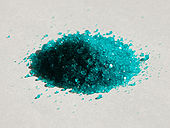
Hydrated nickel sulfate crystals - pic courtesy of Wikipedia

Nickel is used in stainless steel, rechargeable batteries, electric guitar strings, coins, and plating on plumbing fixtures.


Nickel is the top confirmed contact allergen worldwide, partly due to its use in jewelry for pierced ears.  Many earrings are now made without nickel, or with a low-release nickel.  Contact dermatitis is marked by itchy, red skin and affects nearly 72.29 million people.

Saturday, April 14, 2018

M is for Malachite


Malachite is a beautiful stone with layers of light and dark green.  This makes it easy to recognize.  The lines can be straight, curvy or wiggly. 

Malachite, isn't this beautiful?

Malachite often results from the weathering of copper ores.  It is typically associated with copper deposits around limestone.  Sometimes it’s found as stalactites in caves.  Wouldn’t that be an amazing sight?

This malachite is from Arizona 

Malachite is found worldwide.  Arizona is the most notable place in the US.


Malachite specimens

Malachite can be used for ornaments, furniture and jewelry.  There are large vases in museums.


Malachite - this vase is in Hermitage Museum in St. Petersburg

When I lived in Alaska in the 1970’s, we sold malachite and other gemstones, such as turquoise, in the leather store I worked in.  We had lots of items that used stone embellishments.  I still have a purse I made in the leather shop there and it has a drilled malachite closure.

Photos courtesy of Wikipedia and a gemstone site in the UK

Friday, April 13, 2018

L is for lead


Lead is a heavy metal that’s denser than most common materials.  Lead starts out as bluish-white, but tarnishes to a dull gray when exposed to air.  The abundance of lead and its low cost made it ideal for building materials. 

It’s been used in construction, batteries, bullets, solder, plumbing and white paint to name a few.  It’s easily extracted and highly melt-able.

Lead bullets - pic courtesy of Wikipedia

The toxicity of lead was recognized in the early 19th century and many of its uses have been phased out.  Lead is a neurotoxin that accumulates in bones and soft tissue.  It damages the nervous system and causes blood disorders. 

Lead is generally found combined with Sulphur and rarely occurs in its native metallic form.

Lead chunks - pic courtesy of Wikipedia

During the Roman Empire lead was used for making water pipes.  It’s application included pharmaceuticals, roofing, currency and warfare.  In the 13th century lead was being used for stained glass.  Lead was also used in drinking vessels that resulted in mass lead poisonings in the late 18th century.

Lead was one of the principles used in the printing press, invented around 1440.  The lead dust commonly inhaled by workers caused lead poisoning.  Lead was also used to make bullets for firearms and in the white paint worn by geishas and Western European aristocracy who believed a white face was regarded as a sign of modesty and feminine virtue.  This white face paint led to the invention of powdered wigs and eye liner that phased out with the French Revolution in the late 18th century.


Lead - pic courtesy of Wikipedia

By the mid 1980’s the United States had moved to phase out lead in non-battery products such as gasoline, paint, solder and water systems.  Old houses can still contain lead paint and it also is still found in tubing and insulation of electrical cords.  One must be careful when stripping old paint by sanding as it’s dusty and workers can easily inhale this dust.  Poisoning generally results from ingestion of food or water contaminated with lead.  It can enter the body through inhalation, ingestion and skin absorption.  Cigarette smoke contains, along with other toxic substances, radioactive lead.

Thursday, April 12, 2018

K is for Kunzite


Kunzite is a pink to lilac gemstone.  The coloring is from trace amounts of manganese.  Some kunzite has been heated or eradiated to enhance the color for jewelry.

Kunzite pic courtesy of Wikipedia

It was discovered in 1902 so is relatively new in the world of minerals.  It gets its name from George Frederick Kunz who was the chief jeweler at Tiffany and Co at the time.  He was a noted mineralogist. 


Kunzite from Afghanistan courtesy of Wikipedia

Kunzite is found in Brazil, the US, Canada, Mexico, Sweden, Western Australia, Afghanistan and Pakistan.  The Duchess of Glouchester wears kunzite in her tiara and has a necklace made with this mineral.

Wednesday, April 11, 2018

J is for Jasper


Kaleidoscope jasper

This is what I usually think of for jasper

Jasper is a form of quartz that is usually red, yellow, green or brown, or a mixture of these colors that when polished makes beautiful jewelry.  The name means “speckled stone.”  Like many minerals, Jasper forms from volcanic ash.  Patterns arise during the consolidation process.  Sometimes the original materials are fractured allowing other colorful minerals to fill in the gaps.


Polished jasper

Yellow jasper

This is a jasper bowl from Russia late 19th century- all pics courtesy of Wikipedia

Jasper was popular in the ancient world because it breaks with a smooth surface and is easily refined.  Weathering with time will create intensely colored pieces of jasper.  Today sometimes the jasper is named for the region where it originates, such as Biggs jasper from Oregon and Bruneau jasper from the Bruneau River in Idaho.  There’s also one called Llanddwyn Island jasper from Wales 

Tuesday, April 10, 2018

I is for Iridium


Iridium was discovered in 1803 and is part of the platinum group of metals.  It’s hard, brittle and silvery white.  It’s also the most corrosive resistant metal.  Iridium is one of the rarest metals in Earth’s crust.  Iridium metal is used when high corrosion existence at high temperatures is needed, such as high performance spark plugs.

Iridium is found in meteorites in much higher abundance than in Earth’s crust.  It’s believed this mineral was in the large meteorite that crashed into Earth thousands of years ago and caused the extinction of the dinosaurs.

A troy ounce of iridium - photo courtesy of Wikipedia

Because of iridium’s high melting point, it makes this metal very hard to machine or form.  Iridium is the most non corrosive mineral known.  It isn’t even corroded by acid, molten medals or silicates.  It can be attacked by some molten salts such as sodium cyanide or potassium cyanide.

The largest primary reserves of iridium are found on Africa, Russia and Canada.


Certain long-life aircraft parts are made from an iridium alloy.  Other alloys of iridium are used in deep water pipes.  It’s also used in x-ray telescopes.  The radioisotope iridium-192 is used as a source of gamma radiation for treating some types of cancer.

Monday, April 9, 2018

H is for Hematite


Hematite is the mineral form of iron oxide.  Hematite is harder than iron, but also more brittle.  It ranges in color from black to silver-gray and brown to reddish-brown and red.  Gray hematite is found in places with standing water such as mineral hot springs, or a lake or stream.  In places without water, it usually occurs as a product of volcanic activity.

Raw hematite courtesy of Wikipedia

Hematite’s most popular time in jewelry was during the Victorian era in Europe.


Carved bear courtesy of Wikipedia

Huge deposits of hematite are found in banded iron formations.  There’s a type of red hematite that’s used in traditional Swedish house paint.